







Gas for Portable Camping Stove: Which Canister Should You Buy?

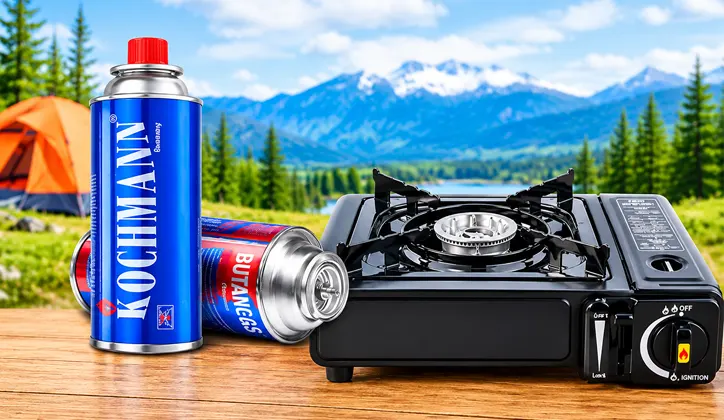
The right gas for portable camping stove is the one your stove was built to take. Tabletop stoves with a side compartment usually use push-in butane cartridges, such as a 227g can, while backpacking stoves use screw-thread canisters. They don’t swap, so check your manual first and keep plain butane for mild weather.
We’re SDMAX, a wholesaler in Manchester, and we supply both the stove and the cartridge covered below. This guide is for campers who want to avoid a mix-up, and for shops, stalls and caravan sites that want to stock these sensibly.
What Gas Does a Portable Camping Stove Use?
Portable camping stoves run on liquefied petroleum gas (LPG). It’s stored as a liquid in a sealed cartridge or cylinder and turns to gas when you light up. You’ll see three names on the label: butane, isobutane and propane. The difference between them is how well they cope with the cold.
| Gas | Boils at about | What it means for you |
| Butane | −1°C | Cheapest. Fine in mild weather, weak in the cold |
| Isobutane | −12°C | A form of butane that holds up better when it’s colder. Usually found in blends |
| Propane | −42°C | Copes with almost any UK cold, but needs strong containers, so small cartridges blend it with other gases |
Isobutane is a form of butane with a branched shape, which lowers its boiling point from about −1°C to about −12°C. In practice, butane struggles well before that, because the can cools as gas is drawn off.. The Camping and Caravanning Club puts the practical limit at about 4°C, which is an ordinary autumn morning in the UK. Copes with hard frost, but is stored at high pressure, so small cartridges mix it with other gases.
The 227g cartridge we supply is plain butane. Treat it as fuel for spring-to-autumn picnics, fishing days and camping trips, and keep it for days that are comfortably above that 4°C mark.
Which Gas Should You Choose?
Blends aren’t always made in the push-in format, so check before you assume one will fit your stove.
| Your situation | What to look for |
| Picnics, fishing or mild-weather camping with a tabletop stove | A plain butane cartridge that matches your stove’s connector, such as our 227g cartridge if your stove takes this type |
| Cold days, near or below about 4°C | A propane and butane blend that your stove is designed to take. Check your manual, and don’t assume a different cartridge will fit |
| Lightweight backpacking | Threaded cartridges, the usual type for small backpacking burners |
| Long stays, big groups or caravans | Larger exchange or refillable cylinders with a regulator |
| Stocking a shop | Cartridge types to match the stoves you sell, clearly labelled on the shelf |
Which Gas Cartridge Fits Your Stove?
The connector decides everything. Cartridges look alike on a shelf, but they connect in different ways and don’t swap.
| Cartridge type | How it connects | Where you’ll find it |
| Push-in (cassette) | Slots into a side compartment, then a lever locks it | Tabletop cassette stoves, like ours |
| Screw-thread | Screws onto the stove or a hose | Many backpacking and camping burners |
| Resealable push-and-turn | Pushes on and twists with a click, can be removed part-used | Stoves built for that system |
| Pierceable | Pierced when fitted, so it stays on until empty | Some older or budget stoves and heaters |
You’ll often see EN417 printed on cartridges. It names the safety standard the can is made to, but it doesn’t tell you whether the cartridge fits your stove, so it always matches the connector as well.
Your stove’s manual says which type it needs. On a cassette stove like ours you can also look at the side compartment. If there’s a lever marked Unlock and Lock and a slot for the cartridge to sit in, it’s a push-in design. Slide the cartridge in gently, and if it doesn’t seat smoothly, stop. Never force it. Not sure? Drop us a message through our contact page and we’ll do our best to help you check before you order.
The Stove and Cartridge We Supply
Here’s exactly what you’re getting, so you can compare it with anything else you’re looking at.
The portable camping gas stove is a black single-burner cooker with a rotary piezo ignition, so there are no matches to lose in the bottom of a bag. The control knob takes you from a gentle simmer up to full flame. It has a four-point pan support, anti-slip feet, a side-loading cartridge compartment with an Unlock/Lock lever, and a protective carry case.
The 227g butane gas cartridge is 227g of butane in a metal canister, with an integrated valve and a protective cap over the valve. The cans carry the Kochmann name. It’s meant for compatible portable gas stoves, and the stove above is the one we list it alongside.
Both sit in our Household & DIY range with other everyday kit.
How Long Does a 227g Cartridge Last?
Honestly, there’s no single number. It depends on your stove and how hot you run it. Here’s how to work it out for yours.
Look for the stove’s gas consumption, usually given in grams per hour (g/h) in the manual or on the stove’s label. Then do this sum:
227 ÷ g/h = hours of full-flame cooking per cartridge
Here’s an example of the sum, not a figure for any particular stove. A stove burning 150 g/h would give roughly 1.5 hours at full flame (227 ÷ 150). Turn the flame down and the cartridge goes further, which is why a simmer costs you less gas than a rolling boil. Cold, wind and a nearly empty cartridge all shorten the run.
To plan a trip, add up the time you’ll realistically have the stove lit: brews, breakfast, a hot meal. Then add a cushion for wind, cold and the odd re-light. If that lands close to one cartridge’s worth, pack a second. A spare cartridge costs less than a cold dinner.
Using Gas Safely
Gas is simple to use, as long as you respect it. The basics:
- Outdoors, in fresh air. Burning gas gives off carbon monoxide. The Camping and Caravanning Club doesn’t recommend cooking inside a tent, and the same goes for an awning, caravan, car or closed room. If you camp a lot, consider a carbon monoxide alarm.
- Change cartridges outdoors. Do the swap in the open air, never in a tent or building and never near naked flames. No smoking while you do it.
- Check before you light. The cartridge should sit properly and the lever should lock.
- If you smell gas, switch off and move away from anything that could ignite it. Never use a naked flame to look for a leak. The gas is heavier than air and will pool on the ground. If liquid gas starts spraying out, get everyone away until the cartridge has emptied and the gas has dispersed.
- Release the lock and take the cartridge out when you’ve finished. Many manuals ask for this, so check yours.
- Store cartridges upright in a cool, dry, ventilated place, away from heat, direct sunlight and children. Don’t leave one in your tent overnight.
- Never puncture, crush, refill or burn a cartridge, even if it feels empty. Never throw an empty container on a fire, because any gas left inside could cause an explosion.
- Use stable, level ground, and don’t leave a lit stove unattended.
- Don’t use it as a heater, and don’t use it for anything other than cooking.
- Don’t store a cartridge in the stove or carry it in a hot car boot. Take it out, put the cap back on, and keep it away from sunlight and heat.
- Check for leaks outdoors with soapy water, never a flam
This is general guidance and doesn’t replace the instructions supplied with your own stove and cartridge. Follow those first.
Before you Buy: A Quick Checklist
- Does the connector on your stove match the cartridge?
- Will it be above about 4°C where you’re cooking? If not, you’ll want a blend that suits your stove.
- Do you have enough cartridges? Use the sum above.
- Have you got a flat, sheltered spot outdoors to cook?
If all four tick off, you’re set. If all four tick off, you’re set. The portable camping gas stove and the 227g butane gas cartridge are both listed now.
Stocking them in a shop, on a Stall or at a Caravan Site?
If you’re buying to sell on, here’s what we’d think about.
- Sell them as a pair. Anyone buying a stove needs fuel, so keep the cartridges beside it.
- Label the connector. A small shelf sign saying which type of cartridge the stove takes saves confusion at the till, and returns afterwards.
- Check your storage. Cartridges are flammable gas. Before you hold a lot of stock, check what’s allowed with your insurer and local fire authority.
- Confirm delivery. Butane counts as a flammable gas for transport, so couriers have their own rules. For larger orders, check the details with us first. Our Shipping & Delivery page covers the basics.
- Ask about quantities. There’s no minimum order value, and we’re happy to talk through larger quantities on our contact page. Orders are typically dispatched from our Manchester warehouse 24 to 48 hours after we receive them, subject to stock.
FAQs about Gas for Portable Camping Stove
What gas do I need for a portable camping stove?
The one your stove was built for. Check the connector and fuel type in the manual. Tabletop cassette stoves take push-in butane cartridges, while backpacking stoves take screw-thread canisters.
Can I use any butane gas cartridge in my stove?
No. Connectors differ and aren’t interchangeable. If a cartridge doesn’t seat smoothly, don’t force it.
How long does a 227g gas cartridge last?
It depends on your stove and flame setting. Divide 227 by the stove’s gas use in g/h to get hours at full flame. A lower flame lasts longer.
Does butane work in cold weather?
Not well. It struggles below about 4°C and can fade near freezing. For cold trips, choose a propane blend and a stove made for it.
Is butane or propane better for camping?
Propane copes with cold far better, while butane suits mild weather. Many small cartridges blend them. Whichever you choose, it has to suit your stove’s connector.
Can I use a camping gas stove indoors or in a tent?
No. Use it outdoors in fresh air, because of the carbon monoxide risk. Never use it inside a tent, caravan, car or closed room.
How do I dispose of an empty gas cartridge?
Never put it on a fire. Check your local council’s guidance for gas cartridges, as rules vary by area.